Rules
Prepaid Card Issuer or Program Manager: Who Actually Holds Your Money?
Prepaid card issuer vs program manager: who actually holds your money? Learn how US rules require the issuer name and where to complain when a fintech app buries it.
What to take away
- The issuing bank, not the app or program manager, holds the underlying card funds.
- US rules require the card packaging or app to name the issuing bank, but program manager disclosure can be buried.
- If a fintech prepaid card fails, contact the bank named on the card first and then the CFPB.
- FDIC insurance is pass-through, tied to the issuing bank's records, not the program manager's marketing.
A prepaid card looks like a bank card, but two different companies usually stand behind it. The issuer is a bank with a charter and deposit insurance. The program manager runs the app, customer support, and card distribution. Many users load money through the app and never learn which bank actually holds it.
Issuer versus program manager
Holds the money?
- Issuing bank
- Yes, pooled custodial account
- Program manager
- Usually no, unless separate stored value license
Regulated by
- Issuing bank
- FDIC, OCC or state bank regulator, CFPB
- Program manager
- State money transmitter regulators, CFPB for some activities
This split matters when you need to dispute a charge or recover a balance. The program manager may answer chat, but the legal obligation to return funds sits with the bank named on the cardholder agreement. The prepaid card structure shows the typical roles of issuing banks and program managers.
Issuer vs Program Manager
Issuing bank
- Holds the money?
- Yes, pooled custodial
- Regulated by
- FDIC, OCC, CFPB
- Legal duty to return funds
- Yes
- Handles support chat
- Sometimes
Program manager
- Holds the money?
- Usually no
- Regulated by
- State money transmitter
- Legal duty to return funds
- No
- Handles support chat
- Usually
When the app freezes: the issuing bank still holds the money
A user loaded $2,500 onto a prepaid card through a fintech app. The app showed the balance and handled support. When the app company froze operations, the user emailed the app's support for two months.
The app never responded. The issuing bank later said the dispute window had closed. The user lost $2,500, though the money had sat at the issuing bank the whole time.
The $2,500 case is illustrative, not a documented complaint.
How $2,500 Was Lost
- StartUser loads $2,500 via fintech app
- App freezesUser emails support for two months
- No responseApp never replies to support email
- LaterIssuing bank says dispute window closed
- Result$2,500 lost despite bank holding funds
Find the issuing bank's name on the back of the card or in the app's account details. If you cannot find it, treat the card as a risk.
Before you load a large sum, confirm that the issuing bank exists and is insured. The FDIC's BankFind Suite lists insured banks. The OCC's financial institution search lists national banks and federal savings associations. Search by the bank's name or charter number. State-chartered issuers may appear only in a state regulator's lookup.
The prevention is to read the cardholder agreement before loading large sums. Note the bank's name and the Regulation E error resolution phone number. For a broader account comparison, see prepaid account compared.
FDIC logo without checking the bank
A common mistake is trusting an FDIC logo on a fintech card without checking which bank is behind it. The card balance displays normally for months, then a fraudulent charge appears.
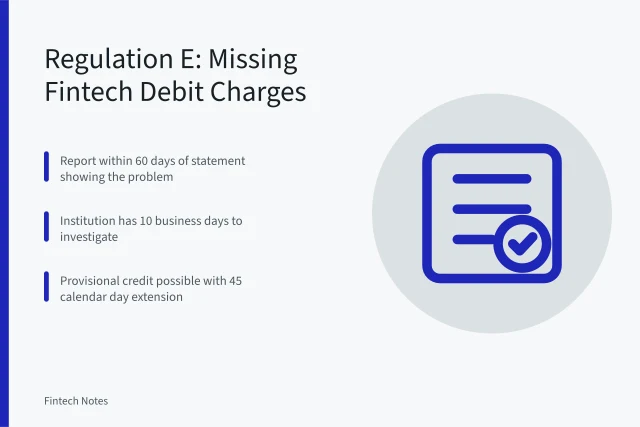
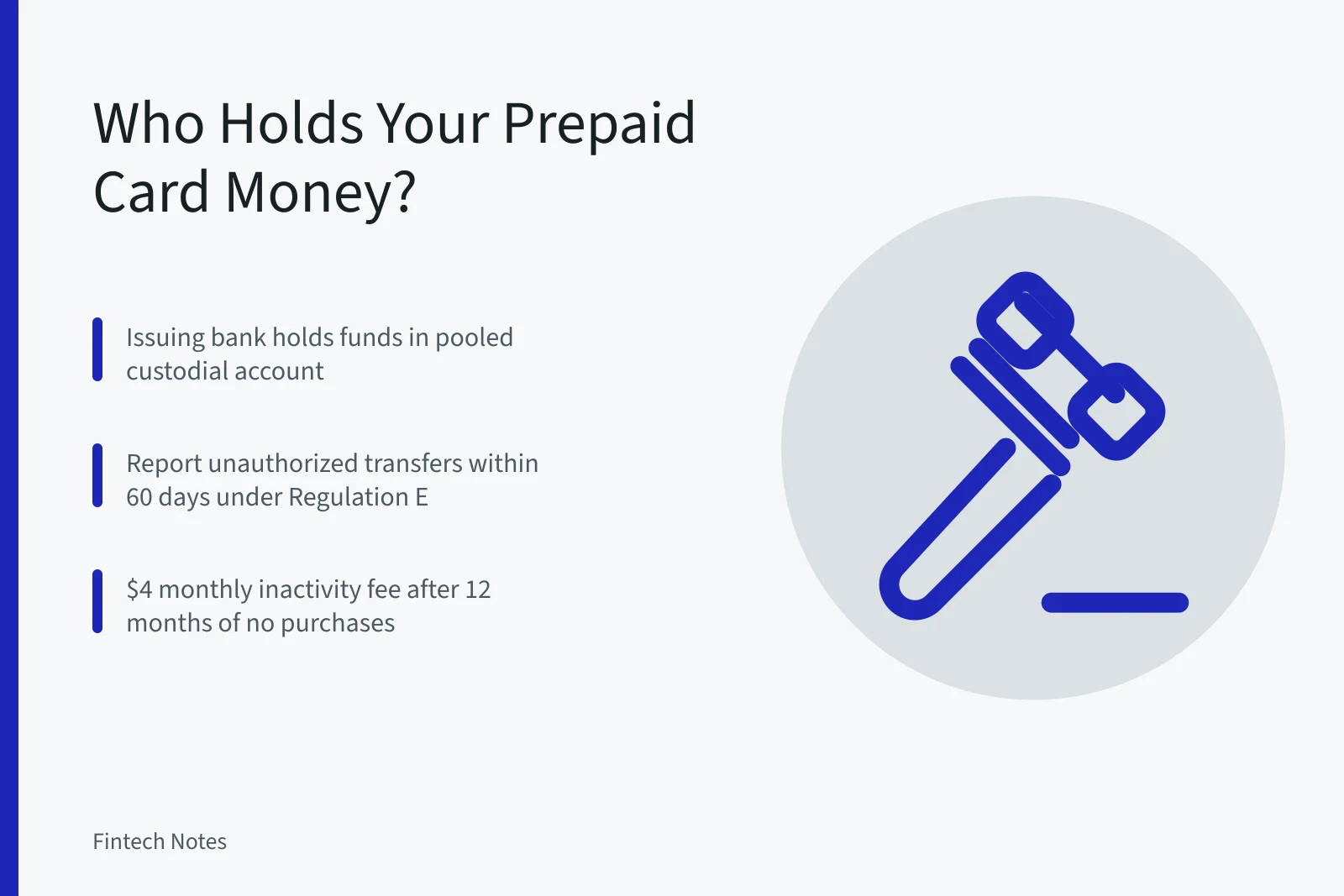
The program manager promises an investigation, but days pass. The user never contacts the issuing bank directly. Under Regulation E, unauthorized transfer errors must be reported within 60 days after the statement is sent. Wait too long and liability can rise.
Once you report, the bank must investigate within 10 business days. It may extend to 45 calendar days if it provisionally credits the disputed amount while it works.
See our Regulation E Deadlines guide for the exact steps when a fintech debit card charge goes missing.
Prevention: save a copy of the cardholder agreement and the issuing bank's dispute phone number. Do not rely on in-app chat for time-sensitive errors. The CFPB's Regulation E text lists the error resolution procedures and deadlines.
Inactivity fees on abandoned cards
An abandoned prepaid card can bleed an inactivity fee that stays invisible for months. After a job change, the user stops using the card, which still holds a $120 balance.
After 12 months without purchases, the program manager charges $4 monthly. The user ignores emailed statements because they land in spam. After two years, the balance is gone. The loss stays hidden because no ATM withdrawal or purchase ever occurred.
Prevention: set a calendar reminder to log in to every prepaid card every 90 days. Close cards you no longer use and request a check for the remaining balance. If the program manager is not a licensed money transmitter in your state, check its money transmitter license status before leaving funds untouched.
What they have in common
Every mistake in this article comes from one assumption: the company that shows you the balance is the one that holds the money. On a prepaid card, that is almost always false.
The CFPB's complaint process lets you file against the issuing bank or the program manager if either ignores your dispute. Start with the bank named on the card. Then file a complaint if the bank does not resolve the error within the Regulation E timeline.
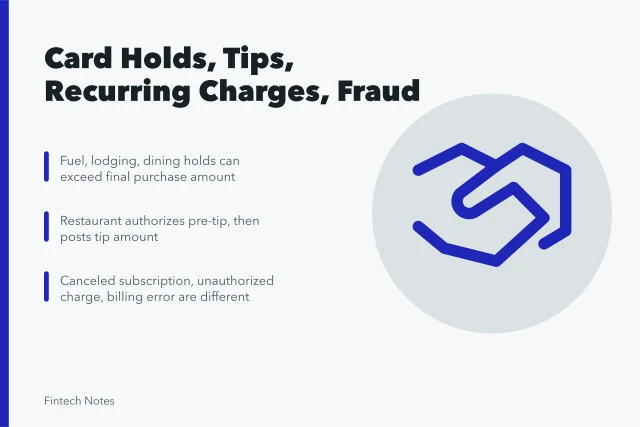
Our card payment guide explains authorization, capture, clearing, settlement, and disputes in plain steps.