
Features
Part of Digital finance security guide: identity, authentication, fraud, and recovery
Payment app account takeover case: containment timeline and control gaps
A fictional payment app account takeover case with a containment timeline, known and unknown facts, contact sequence, root-cause review, and response template.
What to take away
- This fictional case separates unauthorized access from payment facts that still require investigation.
- Containment addresses sessions, authenticators, recovery contacts, email, mobile service, and money movement.
- A precise timeline helps providers trace access and transfers without overstating what is known.
- Prompt reporting can improve response options, but no transfer recovery is guaranteed.
- The post-incident review fixes the recovery chain, not just the password.
This case is fictional. It illustrates a response method and does not predict liability, investigation results, reimbursement, or provider behavior.
The first alert
At 8:14 a.m., Maya receives a payment-app notice for a new login. Two minutes later, a profile-change email says her recovery address was updated. At 8:19, the app reports a $940 payment to an unfamiliar recipient.
Her phone still has service. She opens the app from its existing icon but cannot sign in. She does not call the number in a text that claims to be the app's fraud desk.
Facts known at 8:25
| Fact | Status |
|---|---|
| New login notice | Confirmed in her email account |
| Recovery address changed | Confirmed by provider notice |
| $940 payment | Visible in linked bank activity |
| Person who initiated payment | Unknown |
| Method used to gain access | Unknown |
| Payment status | Pending |
| Texted support number | Unverified |
The team avoids saying that the password was stolen or that the payment is legally unauthorized. Those are hypotheses until evidence supports them.
Known vs Unknown at 8:25
Confirmed
- New login notice
- Confirmed
- Recovery address change
- Confirmed
- $940 payment
- Visible
- Payment initiator
- —
- Access method
- —
- Payment status
- Pending
- Texted support number
- —
Unknown
- New login notice
- —
- Recovery address change
- —
- $940 payment
- —
- Payment initiator
- Unknown
- Access method
- Unknown
- Payment status
- —
- Texted support number
- Unverified
Containment timeline
At 8:27, Maya uses the number printed on a prior account statement to reach the linked bank. She reports suspected account access and the unfamiliar payment. The bank records the notice and gives her a case number.
Containment Timeline
- 827 Maya calls linked bank
- 834 Contacts payment provider
- 846 Secures email and carrier
- 902 Provider restricts account
At 8:34, she reaches the payment provider through its official app-store listing and known website. She asks it to restrict the account, flag the payment, preserve logs, revoke sessions, and restore the previous recovery address after verification.
FTC guidance on what to do after a scam directs people to contact the company behind the payment method, ask whether a reversal is possible, and respond separately when an account or device was compromised. The guide supports the contact sequence here, but it does not promise that this fictional payment can be recovered.
At 8:46, Maya changes her email password from an updated laptop, signs out other email sessions, removes an unfamiliar forwarding rule, and checks recovery contacts. She then changes her mobile-carrier account PIN and confirms that no SIM change occurred.
At 9:02, the payment provider confirms that the account is restricted. It does not yet state who logged in, whether the payment settled, or whether funds will return.
Evidence package
Maya saves the following without editing the originals:
Evidence to Preserve
- New-login and profile-change emails
- Suspicious text, sender, timestamp
- Transaction amount, recipient, reference, status
- Linked-bank entry
- Provider and bank case numbers
- Call times and numbers used
- Screenshots of unknown sessions and recovery changes
- Device list and last legitimate login
She writes observations separately from conclusions. For example, "service remained active" is an observation; "there was no SIM swap" remains a carrier finding subject to the available records.
Rebuilding access
After the provider completes identity checks, Maya regains access. She:
Rebuilding Access Securely
- Set a unique password
- Remove unrecognized devices and sessions
- Revoke unused connected apps
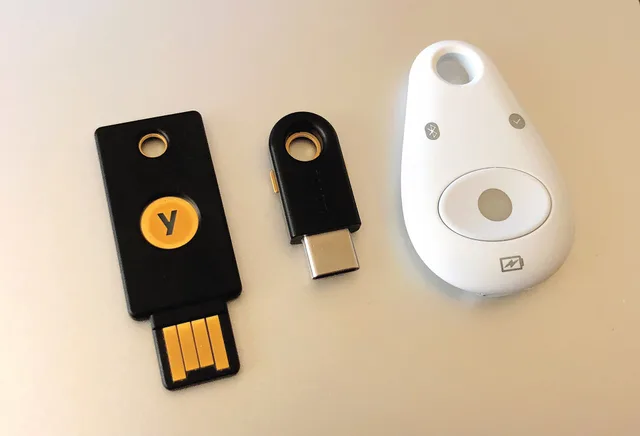
- Enroll phishing-resistant authenticator and backup
- Generate new recovery codes off-phone
- Restore verified email and phone details
- Review recipients, cards, bank links, history
- Enable alerts for logins, changes, payments
The CFPB's common fraud and scam guidance tells consumers who suspect a money transfer or mobile-app payment to a scammer to contact the bank or payment company promptly and alert it to the transaction. It also points to IC3 for reporting online scams. Maya records those reporting options without treating a complaint as a substitute for the provider's dispute process.
Investigation outcome in this fictional case
The provider later reports that a new browser session followed a successful password and one-time-code entry. Its records show the recovery email and recipient were then added from that session. The linked bank and provider continue reviewing the payment under their applicable processes.
The case ends without a stated reimbursement result. That is deliberate. Access records can establish a sequence without deciding every legal question, and different payment facts can produce different outcomes.
Root-cause review
Maya remembers entering her credentials and a code into a page reached through a search advertisement the previous evening. The review identifies four control gaps:
| Gap | Correction |
|---|---|
| Search result used for login | Use a saved, verified app or bookmark |
| Phishable code | Enroll phishing-resistant authentication |
| Recovery change had no delay | Ask provider about old-channel notices and holds |
| Active sessions not reviewed | Check session inventory after security alerts |
The corrective action covers access, recovery, and payment monitoring. Changing the password alone would leave the underlying habits and recovery risks unresolved.
Reusable case template
For any suspected takeover, record:
- what the user observed;
- what the provider confirmed;
- what remains unknown;
- every access and profile event;
- every payment event and status;
- the containment action and exact time;
- preserved evidence and report numbers;
- recovery changes and session revocation;
- investigation outcome and remaining monitoring.
Common questions
Why does the case avoid calling the payment unauthorized at first?
Because the initial facts show unfamiliar activity, not yet who initiated it or how applicable rules classify it.
Why contact both the app and linked bank?
They may control different parts of access, payment processing, records, and dispute handling.
Does prompt reporting guarantee a refund?
No. It can improve available response options, but the result depends on facts, payment type, provider, law, and timing.
Why preserve the suspicious text?
It may help establish the contact method, sender, timing, link, instructions, and relationship to later account events.