Guides
Digital payments guide: money, messages, ledgers, clearing, and settlement
A digital payment guide that separates the instruction, the ledger entries, clearing, and settlement so fees, holds, and reversals make sense.
What to take away
- A payment app is an interface; the funds may sit at a partner bank under that bank's charter, not the app's.
- Authorization approves an attempt and can hold funds. It is not a posted debit.
- Clearing exchanges and reconciles transaction data. Settlement moves the balances that discharge the obligation.
- Available balance, current balance and settled position are three different numbers.
- A dispute file needs the rail, the trace number, the provider transaction ID and the timeline.
A tap, a scan, a press of Send: one gesture. Behind it, several firms exchange instructions, reserve funds, screen the transfer, update private ledgers and settle between institutions.
Those stages run in seconds or across days, and rarely in the order the app shows. Knowing the layers is how you tell a fee from a hold, and a reversal from a refund.
This guide is educational. Your rights depend on the product, the transaction, the account type and the state you live in.
Five objects, kept apart
Stop using "payment" for all of it. Name the piece you mean.
Five objects kept apart
Obligation
- What it is
- What payer owes
- Example
- Goods handed over
Instruction
- What it is
- Message asking value move
- Example
- Approval message
Funding source
- What it is
- Cash, account, card, token
- Example
- Card account
Ledger entries
- What it is
- Records by app, banks
- Example
- Wallet credits friend
A merchant can hand over goods on an approval message while interbank settlement waits until later. A wallet can credit your friend on its own books before the withdrawal to their bank clears.
Who holds the money
A person-to-person transfer may touch the sender, the recipient, the wallet company, two banks and a rail. A card purchase adds a merchant, a gateway, a processor, an acquiring bank, the card network and the issuing bank.
Who holds the money
Participant
- Payer
- Authorizes instruction, supplies funds
- Payee
- Receives value for sale
- Front-end provider
- Captures instruction, shows status
- Account provider
- Holds balance payment draws on
- Processor or network
- Routes, validates, records messages
- Clearing arrangement
- Confirms or nets obligations
- Settlement institution
- Moves balances that close them
What it does
- Payer
- Payee
- Front-end provider
- Account provider
- Processor or network
- Clearing arrangement
- Settlement institution
| Participant | What it does |
|---|---|
| Payer | Authorizes the instruction, supplies funds or credit |
| Payee | Receives value for a sale or transfer |
| Front-end provider | Captures the instruction, shows status |
| Account provider | Holds the balance the payment draws on |
| Processor or network | Routes, validates, records messages |
| Clearing arrangement | Confirms or nets the obligations |
| Settlement institution | Moves the balances that close them |
One company often wears several of these hats. A brand on the screen does not tell you which legal entity holds your funds, takes your error complaint, or controls settlement.
The chain, stage by stage
The Bank for International Settlements splits front-end arrangements from back-end processing. Front-end arrangements include the account, the instrument, and the channel. Back-end processing includes:
Payment chain, stage by stage
- Initiationpayer creates instruction
- Authenticationchecks actor may use credential
- Authorizationinstitution approves or declines
- Processing and routingreformats into rail standard
- Clearingtransmits and reconciles obligations
- Settlementdischarges what institutions owe
- authentication
- authorization
- fraud checks
- fees
- clearing
- settlement Its account of payments in the digital era treats clearing and settlement as separate acts: clearing transmits and reconciles, settlement discharges.
Follow a payment through seven possible stages.
1. Initiation
The payer creates the instruction. The record carries the amount, the currency and the recipient identifier. It also carries the funding source, the timestamp and the device. A typo here survives every later stage.
2. Authentication
The service checks whether this actor may use this account or credential. A passkey, a one-time code, a device cryptogram or a risk score may contribute. Authentication answers who appears to be acting. It does not prove the purchase is legitimate.
3. Authorization
An institution decides whether to approve. It weighs funds, credit, account status, limits, fraud signals and merchant data. Approval can place a hold and cut available funds without creating a posted debit.
4. Processing and routing
The provider reformats the request into the rail's message standard, attaches identifiers, runs compliance screening and passes it on. Some systems validate the name against the account. Others route on account and institution numbers alone.
5. Clearing
Participants exchange and confirm the transaction data. The system may net each participant's position or carry every instruction gross. Returns, rejects and corrections surface here.
6. Settlement
The participants discharge what they owe each other through the system's settlement arrangement. That can happen in real time, several times a day, or in a scheduled batch. The credit on your screen may come before, after, or only because of it.
7. Posting and availability
Each provider updates its own customer ledger and decides when you can spend or withdraw. Posting, availability and final settlement carry three different timestamps. Treat them as three events.
Status labels are marketing, not states
"Pending," "sent," "complete" and "received" mean whatever the provider's terms say they mean.
Status labels are marketing
Displayed status
- Pending
- Instruction accepted, review open
- Sent
- Sender ledger debited, message transmitted
- Complete
- Provider finished its own step
- Received
- Recipient app credited internally
- Reversed
- Earlier hold or entry released
What it may mean
- Pending
- Has it entered the rail yet?
- Sent
- Did receiving institution accept it?
- Complete
- Has interbank settlement happened?
- Received
- Can the recipient withdraw it?
- Reversed
- Was a separate refund created?
What to ask
- Pending
- Sent
- Complete
- Received
- Reversed
If the terms and the receipt do not define the word, support should give you the rail, the stage and the reference number.
Four balances, one account
Most consumer accounts show more than one number.
Four balances, one account
Balance
- Current balance
- Posted credits minus posted debits
- Available balance
- What provider lets you spend now
- Pending activity
- Authorized or received, not yet posted
- Reserved balance
- Held for transaction, dispute, risk
What it means
- Current balance
- Available balance
- Pending activity
- Reserved balance
One transaction can cut available funds today and post next week. A released authorization lifts available funds without being a refund. A provisional credit during an investigation can be reversed if the provider later finds no covered error.
The instrument is not the money
A card, a QR code, a wallet token, an account number and a payment link all start or authenticate a transfer. None of them is the value itself.
- A mobile wallet can present a token that stands in for a card credential while the purchase is funded from the card account.
- A payment app can run a stored balance and also pull from a linked bank account.
- A bank app can send an instant payment that settles over a separate interbank service.
- A stablecoin wallet moves a token on a ledger; redemption into a bank deposit follows a different process entirely.
Ask what claim or balance changes at each step. That question beats asking whether the payment was digital.
Fees attach to events
Cost shows up at different moments and lands on different parties.
Fees attach to events
- Service or transfer fee
- Instant-withdrawal fee
- Currency-conversion spread
- Card cash-advance treatment
- Deduction by recipient or intermediary
- Merchant acceptance cost
- Return or failed-payment fee
- Network or blockchain fee
For each one, write down who charges it, when it becomes final, and whether it was inside the total you saw. A "no fee" transfer can still carry a foreign-exchange spread or a delay in availability.
Build the file before you call
When a payment looks wrong, gather the facts in one place.
Build the file before you call
- Amount and currency
- Sender and recipient identifiers, redacted
- Initiation time and full status history
- Funding-source entries
- App or processor transaction ID
- Rail trace or reference number
- Receiving-account entries
- Fees, exchange rate, promised delivery date
Then name the stage that failed. A missing debit, an open authorization, a stuck return and an unposted credit are four different problems with four different owners. "The money is gone" describes the feeling, not the fault.
For a card or deposit account error, the institution's error-resolution process and the CFPB's complaint system are the named channels. For a wire, the sending bank's wire department owns the trace. Nothing here is legal advice; for a dispute that turns on your rights, consult a licensed attorney or the regulator's own filing process.
Finality is narrower than it sounds
Settlement finality is about when a transfer between participants becomes irrevocable under the system's rules. It does not block a later refund, return, dispute adjustment, court order or fraud recovery.
A "final" label on your screen settles nothing legal either. Consumer protections can still require an investigation or a correction for covered transactions. Contractual rules may govern the rest. Identify the transaction type before you cite a remedy.
Where the money actually sits
A wallet balance, a prepaid card and a brokerage sweep account are not the same product, even when one app shows all three. The differences between bank, prepaid, brokerage and app balances decide who owes you the money and which regulator hears your complaint.
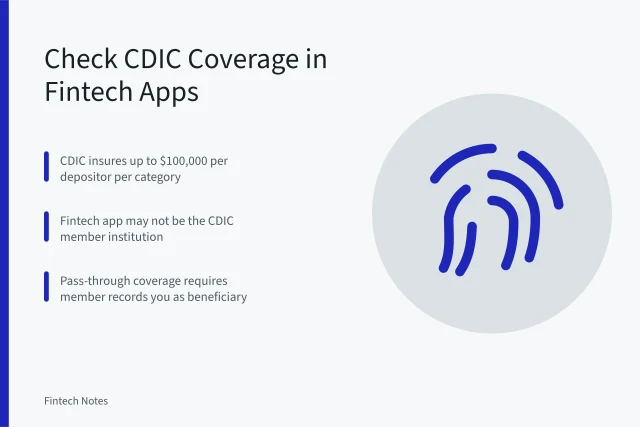
Ask the provider three questions. Which entity holds the funds? Is that entity a bank, and is the balance insured, and under which program? What happens to the balance if the app or its partner fails?
Common questions
Is an authorized payment the same as a settled payment?
No. Authorization approves an attempt and may hold funds. Clearing, settlement, posting and availability can all follow later, and each can fail on its own.
Does a wallet hold my money?
Sometimes. A wallet may run a stored balance, point at a linked bank account, hold only a card credential, or control a token. The account agreement names which one you have.
Why can a recipient see funds they cannot withdraw?
The provider may have credited its internal ledger before the external transfer or a review finished. It may also apply an availability hold on top of the credit.
What should I ask support for?
Ask for several details about that transfer:
- the provider transaction ID
- the rail
- the initiation time
- the amount
- the provider's definition of the status shown
- any bank or rail trace number for that transfer
In this guide
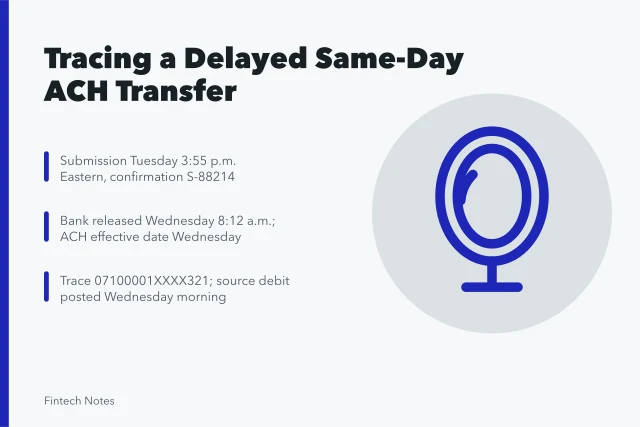
- How to trace a digital payment from instruction to settlementTrace a stuck digital payment by naming the rail, matching references and timestamps, separating holds from postings, and escalating the missing stage.
- Cash, bank deposits, electronic money, and stablecoins comparedCash, bank deposits, electronic money, and stablecoins compared by issuer, holder claim, ledger, redemption, settlement, insurance, access, and risk.
- Digital payment product evaluation checklistDigital payment product checklist for provider identity, fund custody, deposit insurance, fees, timing, privacy, security, errors, outages, and account closure.